|
Case Report
Durable response to tipifarnib in a patient with refractory head and neck cancer with a HRAS mutation: A case report
1 Willamette Valley Cancer Institute and Research Center, Eugene, OR 97401, USA
2 Department of Oncology, Mayo Clinic, Rochester, MN 55905, USA
3 Division of Hematology, Mayo Clinic, Rochester, MN 55905, USA
Address correspondence to:
Jennifer J Gile
MD, Willamette Valley Cancer Institute and Research Center, 520 Country Club Rd, Eugene, OR 97401,
USA
Message to Corresponding Author
Article ID: 100159Z10JG2026
Access full text article on other devices

Access PDF of article on other devices


How to cite this article
Gile JJ, Price K, Baral B, Witzig TE. Durable response to tipifarnib in a patient with refractory head and neck cancer with a HRAS mutation: A case report. J Case Rep Images Oncology 2026;12(2):8–12.ABSTRACT
Introduction: Head and neck squamous cell carcinoma (HNSCC) remains a clinically challenging malignancy, particularly in the recurrent or metastatic setting after progression on multimodality therapy. Activating Harvey rat sarcoma viral oncogene homolog (HRAS) mutations occur in approximately 4–8% of HNSCC and represent a potentially actionable target. Tipifarnib, an oral farnesyltransferase inhibitor, has demonstrated promising activity in HRAS-mutant tumors but is not commercially available despite prior Breakthrough Therapy designation.
Case Report: We report the case of a 48-year-old woman with recurrent, treatment-refractory oral cavity squamous cell carcinoma who experienced a dramatic and durable response to tipifarnib. Following initial treatment, she developed rapid locoregional recurrence requiring tracheostomy. Her disease progressed through multiple lines of therapy. Comprehensive next-generation sequencing of recurrent tumor tissue revealed an HRAS mutation. Given lack of response to prior checkpoint inhibitors, compassionate use of tipifarnib was initiated. The patient experienced a near-complete response within two months and achieved a complete response by 12 months and continues to remain disease free almost two years after therapy initiation with excellent functional recovery and manageable toxicity limited primarily to neutropenia.
Conclusion: This case highlights the transformative potential of precision oncology in refractory HNSCC. Broader access to HRAS-targeted therapies and prospective validation of molecular predictors are urgently needed to improve outcomes in this molecularly defined subset.
Keywords: Farnesyltransferase inhibitor, Head and neck squamous cell carcinoma, HRAS mutation, Precision oncology, Tipifarnib
Introduction
Head and neck squamous cell carcinoma (HNSCC) remains a significant global health challenge, contributing to high morbidity and mortality. Despite advancements in surgery, radiation, immunotherapy, and chemotherapy, patients with locally advanced or recurrent HNSCC face a poor prognosis due to metastatic progression and treatment resistance [1],[2]. The conventional therapeutic strategies have centered on chemoradiotherapy regimens, but the limitations of these treatments in refractory cases have highlighted the need for innovative approaches, particularly through molecularly targeted therapies [3]. Recent studies have demonstrated that molecular profiling, especially next-generation sequencing (NGS), can identify actionable genetic mutations that may lead to more effective, personalized treatment strategies in HNSCC [4].
Among the genetic alterations implicated in the pathogenesis of HNSCC, HRAS mutations have emerged as a critical driver. HRAS, a member of the rat sarcoma (RAS) family of oncogenes, is involved in cell growth, survival, and differentiation via activation of downstream pathways such as the mitogen-activated protein kinase (MAPK) and phosphoinositide 3-kinase (PI3K)/protein kinase B (AKT) pathways. Mutations in the HRAS proto-oncogene occur in about 4–8% of patients with recurrent or metastatic HNSCC [5] and are believed to contribute to treatment resistance [6]. However, HRAS-driven tumors have not yet been extensively targeted by existing therapies. One promising avenue is the use of farnesyltransferase inhibitors (FTI), such as tipifarnib, a small molecule inhibitor of farnesyltransferase, an enzyme involved in the post-translational modification of RAS family proteins. In a pivotal phase II trial (KO-TIP-001), tipifarnib achieved an objective response rate (ORR) of 55% in patients with HRAS-mutant tumors and a variant allele frequency (VAF) ≥20%, with median progression-free survival (PFS) of 5.6 months and median overall survival (OS) of 15.4 months [7]. These findings led to a Food and Drug Administration (FDA) Breakthrough Therapy Designation in 2021 for recurrent or metastatic HRAS-mutant HNSCC following platinum-based therapy [7],[8]. Despite this designation over five years ago, neither tipifarnib nor any FTI is clinically available. In this case report, we present the clinical course of a 48-year-old woman with recurrent, treatment-resistant oral cavity squamous cell carcinoma who experienced a clinically significant and sustained response to tipifarnib.
Case Report
A 48-year-old woman presented with a lesion on the right lingual mandibular region of her mouth, which was biopsied by her dentist and confirmed to be squamous cell carcinoma (SCC). A subsequent positron emission tomography-computed tomography (PET-CT) scan showed hypermetabolic uptake in the right lingual gingiva, consistent with malignancy, and no evidence of fluorodeoxyglucose (FDG)-avid disease at other sites. The patient underwent primary surgical resection consisting of a segmental mandible resection and right neck dissection. Pathologic examination revealed a 2.5 × 1.9 × 0.6 cm invasive moderately differentiated keratinizing SCC, grade 2, with no lymphovascular or perineural invasion. Depth of invasion was 6 mm and surgical margins were negative. In the neck dissection, 2 out of 21 lymph nodes were involved, without extranodal extension (pT2N2b). Final pathologic stage per American Joint Committee on Cancer (AJCC) 8th edition was pT2N2bM0, stage IVA. Human papillomavirus (HPV) status was not evaluated due to oral cavity primary. Postoperative radiation therapy was administered to a dose of 60 Gy over six weeks.
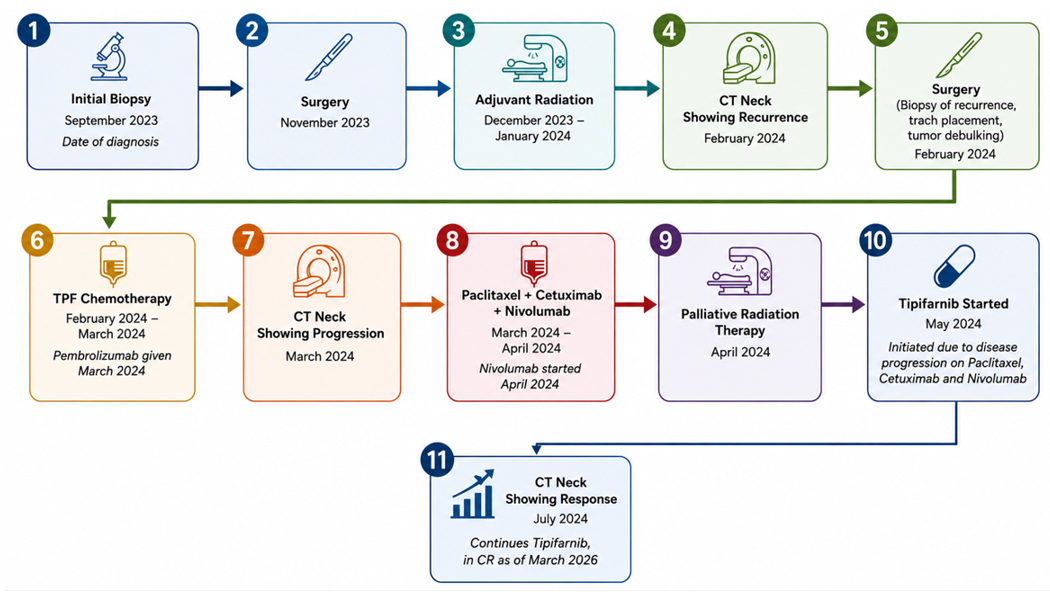
One month following the completion of radiation, the patient presented with a mass in her anterior neck. A repeat CT scan revealed centrally necrotic lymph nodes in the left and central neck, raising concerns for recurrent disease within the prior radiation field with moderate tracheal narrowing. The patient underwent emergency tracheostomy and tumor debulking, with pathology confirming recurrent SCC. Due to the rapid recurrence after combined modality therapy, she was treated with an aggressive chemo-immunotherapy regimen with docetaxel, 5-fluorouracil, and cisplatin (TPF) with pembrolizumab. She received 2 cycles of therapy. The patient had no response with a follow-up CT showing marked interval increase in multiple necrotic lymph nodes in the left and central neck with interval development of a fistula into the anterior tracheal wall. She was subsequently treated with 2 cycles of paclitaxel, cetuximab, and nivolumab, and received re-irradiation therapy. Despite these aggressive treatments, her disease continued to progress, and she developed a fungating mass on the neck.
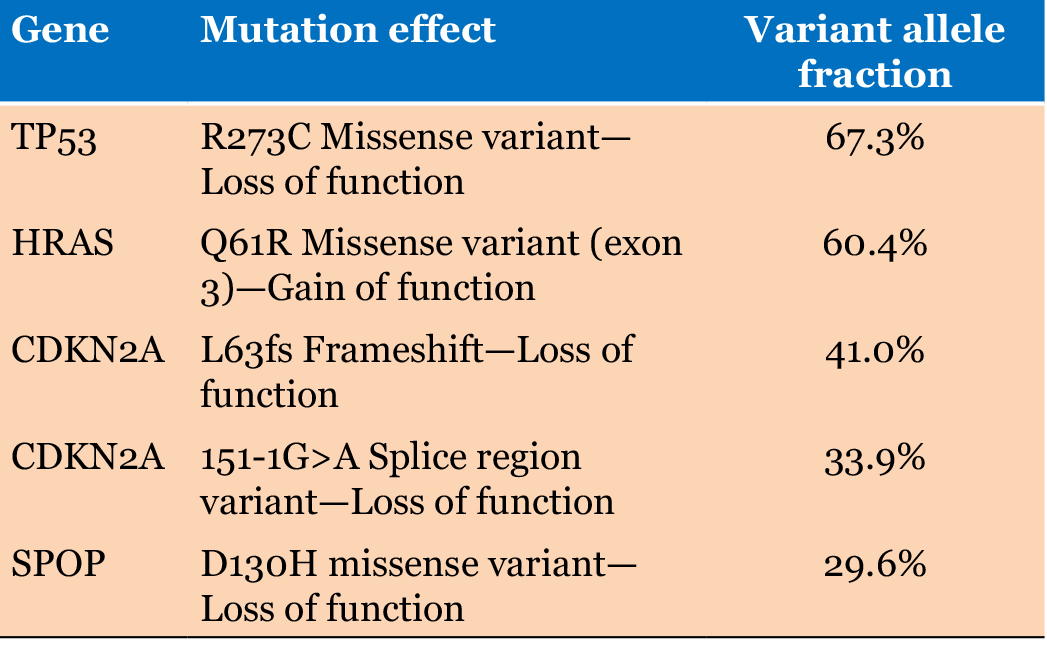
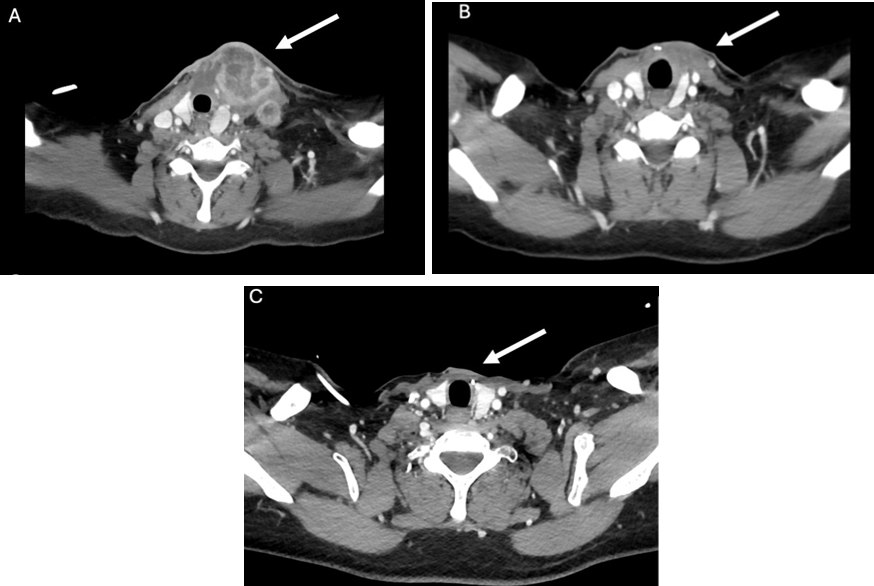
Given the limited therapeutic options and the rapid progression of her disease, next-generation sequencing (Tempus Oncology) was performed on tumor tissue from her recurrent disease biopsy, revealing an HRAS missense mutation along with mutations in TP53, CDKN2A, and speckle-type POZ protein (SPOP) (Table 1). The tumor mutational burden (TMB) was 12.1 mutations per megabase (very high; 90th percentile), and the tumor was microsatellite stable. Based on the high TMB, pembrolizumab was recommended per the TEMPUS report, but due to the patient’s lack of response to two prior checkpoint inhibitors, the decision was made to pursue off-label use of tipifarnib. Compassionate use of the drug was approved by Kura Oncology, the FDA, and the Mayo Clinic Institutional Review Board. Tipifarnib was initiated at a dose of 600 mg twice a day on days 1–7 and 15–21 of a 28-day treatment cycle approximately three weeks after her progression on radiation. The response to single-agent tipifarnib was surprisingly rapid and within two months, the patient experienced a near-complete response which became complete after 12 months as documented by the radiologist on CT scan (Figure 1). The clinical timeline of the patients disease course, treatments, and response milestones is summarized in Figure 2. She has returned to full-time work, and her tracheostomy has been removed. She has tolerated treatment well with her primary toxicity being neutropenia requiring occasional dose interruptions. As of her last visit in March 2026, the patient is now 23 months on continuous treatment and remains disease free.
Discussion
This case presents a unique and compelling example of how precision oncology can be utilized to manage refractory HNSCC. Despite progression through standard therapies, including chemotherapy, immunotherapy, and re-irradiation, molecular profiling revealed an HRAS Q61R mutation and co-occurring TP53 and CDN2A alterations. The decision to pursue off-label use of tipifarnib, based on the identification of this mutation, resulted in a rapid response that became a complete response at 12 months and has remained durable nearly two years after therapy initiation.
HRAS mutations are relatively rare in HNSCC but have been implicated in various malignancies. These mutations activate the MAPK pathway, contributing to uncontrolled cell proliferation, survival, and metastasis [5]. Tumors driven by HRAS mutations often demonstrate resistance to traditional therapies, including chemotherapy and immunotherapy, which is a significant challenge in treating advanced HNSCC [6]. Targeting HRAS directly has thus emerged as an attractive option, particularly with the use of FTIs like tipifarnib, which block HRAS activation by inhibiting its post-translational modification [8]. While still investigational, early studies have shown promising results in HRAS-driven cancers, particularly in those resistant to standard therapies. In the phase II clinical trial in patients with HRAS mutated HSNCC and a VAF of ≥20%, median PFS on tipifarnib was 5.6 months and medial overall survival was 15.4 months [7]. More recently, real-world analyses have further supported the clinical benefit of tipifarnib in this population, demonstrating median OS of 25.5 months among HRAS-mutant HNSCC treated with tipifarnib [6].
The present patient harbored both a TP53 and CDKN2A mutation, which are common co-mutations in HNSCC that have been associated with worse overall survival compared to TP53 mutations alone. Li et al. demonstrated that CDKN2A deletions in the setting of a gain of function TP53 mutation led to shorter survival in squamous cell carcinoma models [9]. Interestingly, HRAS-mutant HNSCC is typically associated with a lower frequency of TP53 mutations compared with HRAS wild-type tumors [7],[10]. However, a prior case report describing a young woman with rapidly progressive HNSCC treated with tipifarnib documented a concurrent TP53 mutation and a rapid, durable response lasting eight months [11].
Whether TP53 and CDKN2A co-mutations contributes to treatment response remains unclear. It has been shown previously that co-occurring MAPK and PI3K pathway alterations can confer resistance to farnesyltransferase inhibitors in preclinical models, highlighting the importance of evaluating co-mutational profiles in predicting treatment response [12]. The absence of a PIK3CA mutation or phosphatase and tensin homolog (PTEN) alteration may have contributed to the favorable response in this patient.
Importantly, the HRAS mutant allele fraction in this patient exceeded 60%, substantially higher than the ≥20% threshold used in prior clinical trials. Higher variant allele frequency may reflect greater oncogenic dependence on HRAS signaling and could plausibly contribute to the depth and durability of response observed in this case. This aligns with emerging evidence suggesting that HRAS VAF may serve as a predictive biomarker for response to tipifarnib and warrants further prospective evaluation. In the KO-TIP-001 trial, an ad hoc analysis of the first 16 patients demonstrated that patients with higher HRAS VAF had superior responses, leading to the restriction of enrollment to patients with VAF ≥ 20%. Whether HRAS VAF above a higher threshold (≥50%) predicts more durable responses warrants further evaluation.
The success of tipifarnib in this case underscores the importance of molecular profiling in identifying actionable mutations, particularly in tumors that have failed multiple lines of therapy. This case also highlights the important role of compassionate use programs in providing access to promising, off-label treatments when standard therapies are no longer effective. Although tipifarnib is not yet commercially available, the patient’s durable complete response to therapy provides additional evidence supporting the clinical activity of HRAS-targeted therapy. Similar responses to tipifarnib have been seen in relapsed/refractory T-cell lymphomas with mutations in Rho A, TET2, and DNMT3 [13].
Notably, the therapy had a substantial impact on the patient’s clinical trajectory and quality of life. Prior to initiating tipifarnib, the patient and her family were preparing for hospice, and the patient was rapidly declining. Tipifarnib resulted in clinical improvement and prolonged disease-free survival. The functional recovery observed in this case underscores the potential value of molecularly targeted approaches not only in extending survival but also in improving day-to-day outcomes for patients with advanced HNSCC.
While HRAS-targeted agents like tipifarnib show promise, further trials are required to confirm their safety and efficacy as single agents and when combined or sequenced with chemoimmunotherapy. Deeper insight into the biology of HRAS mutations may improve treatment strategies and overcome resistance.
Conclusion
This case demonstrates the clinical efficacy of tipifarnib, a farnesyltransferase inhibitor, in a patient with heavily pretreated, refractory head and neck SCC harboring an HRAS Q61R mutation with a high VAF of 60%. The durable complete response observed after 23 months of continuous therapy, along with her clinical recovery, adds to the growing body of evidence supporting HRAS-targeted therapy in molecularly selected patients with HNSCC. This case underscores the importance of comprehensive molecular profiling in identifying actionable mutations in refractory disease and highlights the critical role of compassionate use programs in providing access to investigational therapies.
REFERENCES
1.
Johnson DE, Burtness B, Leemans CR, Lui VWY, Bauman JE, Grandis JR. Head and neck squamous cell carcinoma. Nat Rev Dis Primers 2020;6(1):92. [CrossRef]
[Pubmed]

2.
Wang Y, Han J, Zhu Y, Huang N, Qu N. New advances in the therapeutic strategy of head and neck squamous cell carcinoma: A review of latest therapies and cutting-edge research. Biochim Biophys Acta Rev Cancer 2025;1880(1):189230. [CrossRef]
[Pubmed]
3.
Nakano K. Progress of molecular targeted therapy for head and neck cancer in clinical aspects. Mol Biomed 2021;2(1):15. [CrossRef]
[Pubmed]
4.
Chung CH, Guthrie VB, Masica DL, Tokheim C, Kang H, Richmon J, et al. Genomic alterations in head and neck squamous cell carcinoma determined by cancer gene-targeted sequencing. Ann Oncol 2015;26(6):1216–23. [CrossRef]
[Pubmed]
5.
Smith AE, Chan S, Wang Z, McCloskey A, Reilly Q, Wang JZ, et al. Tipifarnib potentiates the antitumor effects of PI3Kα inhibition in PIK3CA- and HRAS-dysregulated HNSCC via convergent inhibition of mTOR activity. Cancer Res 2023;83(19):3252–63. [CrossRef]
[Pubmed]
6.
Coleman N, Marcelo KL, Hopkins JF, Khan NI, Du R, Hong L, et al. HRAS mutations define a distinct subgroup in head and neck squamous cell carcinoma. JCO Precis Oncol 2023;7:e2200211. [CrossRef]
[Pubmed]
7.
Ho AL, Brana I, Haddad R, Bauman J, Bible K, Oosting S, et al. Tipifarnib in head and neck squamous cell carcinoma with HRAS mutations. J Clin Oncol 2021;39(17):1856–64. [CrossRef]
[Pubmed]
8.
Gilardi M, Wang Z, Proietto M, Chillà A, Calleja-Valera JL, Goto Y, et al. Tipifarnib as a precision therapy for HRAS-mutant head and neck squamous cell carcinomas. Mol Cancer Ther 2020;19(9):1784–96. [CrossRef]
[Pubmed]
9.
Li Z, Gonzalez CL, Wang B, Zhang Y, Mejia O, Katsonis P, et al. Cdkn2a suppresses metastasis in squamous cell carcinomas induced by the gain-of-function mutant p53(R172H). J Pathol 2016;240(2):224–34. [CrossRef]
[Pubmed]
10.
Cerami E, Gao J, Dogrusoz U, Gross BE, Sumer SO, Aksoy BA, et al. The cBio cancer genomics portal: An open platform for exploring multidimensional cancer genomics data. Cancer Discov 2012;2(5):401–4. [CrossRef]
[Pubmed]
11.
Jagadeeshan S, Suryamohan K, Shin N, Mathukkada S, Boyko A, Melikhova D, et al. Evolutionary dynamics of tipifarnib in HRAS mutated head and neck squamous cell carcinoma. Oral Oncol 2024;149:106688. [CrossRef]
[Pubmed]
12.
Nigam A, Krishnamoorthy GP, Chatila WK, Berman K, Saqcena M, Walch H, et al. Cooperative genomic lesions in HRAS-mutant cancers predict resistance to farnesyltransferase inhibitors. Oncogene 2024;43(37):2806–19. [CrossRef]
[Pubmed]
13.
Witzig T, Sokol L, Kim WS, de la Cruz Vicente F, Martín García-Sancho A, Advani R, et al. Phase 2 trial of the farnesyltransferase inhibitor tipifarnib for relapsed/refractory peripheral T-cell lymphoma. Blood Adv 2024;8(17):4581–92. [CrossRef]
[Pubmed]
SUPPORTING INFORMATION
Acknowledgments
No artificial intelligence writing tools were used in preparation of the manuscript.
Author ContributionsJennifer J Gile - Conception of the work, Design of the work, Drafting the work, Revising the work critically for important intellectual content, Final approval of the version to be published, Agree to be accountable for all aspects of the work in ensuring that questions related to the accuracy or integrity of any part of the work are appropriately investigated and resolved.
Katharine Price - Conception of the work, Design of the work, Drafting the work, Revising the work critically for important intellectual content, Final approval of the version to be published, Agree to be accountable for all aspects of the work in ensuring that questions related to the accuracy or integrity of any part of the work are appropriately investigated and resolved.
Binav Baral - Conception of the work, Design of the work, Drafting the work, Revising the work critically for important intellectual content, Final approval of the version to be published, Agree to be accountable for all aspects of the work in ensuring that questions related to the accuracy or integrity of any part of the work are appropriately investigated and resolved.
Thomas E Witzig - Conception of the work, Design of the work, Analysis of data, Drafting the work, Revising the work critically for important intellectual content, Final approval of the version to be published, Agree to be accountable for all aspects of the work in ensuring that questions related to the accuracy or integrity of any part of the work are appropriately investigated and resolved.
Guaranter of SubmissionThe corresponding author is the guarantor of submission.
Source of SupportNone
Consent StatementWritten informed consent was obtained from the patient for publication of this article.
Data AvailabilityAll relevant data are within the paper and its Supporting Information files.
Conflict of InterestAuthors declare no conflict of interest.
Copyright© 2026 Jennifer J Gile et al. This article is distributed under the terms of Creative Commons Attribution License which permits unrestricted use, distribution and reproduction in any medium provided the original author(s) and original publisher are properly credited. Please see the copyright policy on the journal website for more information.