|
Case Report
Lacrimal gland extranodal marginal zone B-cell lymphoma (EMZL) with high-grade transformation: A case report
1 William Carey College of Osteopathic Medicine, 498 Tuscan Ave, Hattiesburg, MS, USA
2 University of Alabama School of Optometry, Central Plant #1, 1716 University Blvd, Birmingham, AL, USA
Address correspondence to:
Kenzie Hendrix
13484 Windsong Dr, Gulfport, MS 39503,
USA
Message to Corresponding Author
Article ID: 100102Z10KH2022
Access full text article on other devices

Access PDF of article on other devices


How to cite this article
Hendrix K, Patel S, Ayers R. Lacrimal gland extranodal marginal zone B-cell lymphoma (EMZL) with high-grade transformation: A case report. J Case Rep Images Oncology 2022;8:100102Z10KH2022.ABSTRACT
Introduction: Non-Hodgkin’s lymphoma (NHL) comprises a diverse collection of hematologic malignancies that is commonly prevalent worldwide. Although the survival rate of NHL has improved with early detection, treatment, and preventative measures; NHLs can still present within various locations involving the lymphatic system.
Case Report: We present a case of a 57-year-old white female patient who presented to an optometry clinic with complaints of left lacrimal gland swelling and gradual ptosis for six months. The patient refused referral, diagnosis, and treatment of the lymphoma for the subsequent year. After further testing, extranodal marginal zone B-cell lymphoma (EMZL) of the lacrimal gland associated with rare high-grade transformation was found. A robust chemotherapeutic regimen was utilized and successfully led to remission. Lacrimal gland lymphomas are typically lower-grade and have shown a good prognosis with treatment as seen in this case.
Conclusion: The challenges presented with treatment refusal increased the likelihood of high-grade transformation over time. Detection and treatment options for patients diagnosed with lacrimal NHL should emphasize on collaborative efforts from different aspects of patient care.
Keywords: Extranodal marginal zone B-cell lymphoma, Lacrimal gland lymphoma, Ocular adnexal lymphoma, Ocular malignancy
Introduction
Non-Hodgkin’s lymphoma (NHL) is a hematological cancerous growth that has shown to increase in the number of cases since 1975. In the United States, it is the 7th most common malignancy and the 6th most common cause of cancer-related deaths [1]. However, the survival rate of NHL has improved with the application of early detection, treatment, and preventative measures. Non-Hodgkin’s lymphomas can present in various locations involving the lymphatic system. This article reviews the case of a 57-year-old white female patient who presented to an optometry clinic with complaints of left lacrimal gland swelling and gradual ptosis for six months. The patient refused referral, diagnosis, and treatment of the lymphoma for the subsequent year. After further testing, EMZL of the lacrimal gland associated with rare high-grade transformation was found. A robust chemotherapeutic regimen was utilized and successfully led to remission. Lacrimal gland lymphomas are typically lower-grade and have shown a good prognosis with treatment as seen in this case. However, the challenges presented with treatment refusal increased the likelihood of high-grade transformation over time. This article aims to explore the implications of detecting and treating lacrimal NHL with emphasis on the utilization of collaborative efforts from different aspects of patient care.
Case Report
We present a case of a 57-year-old white female who presented to the optometry clinic with complaints of left eyelid drooping (ptosis) and itching (keratosis) that began within the past six months (Figure 1). The patient reported not having seen an optometrist in over five years and that she had previously never experienced these symptoms before. Medical history was consistent with current tobacco use (1 pack/day for 35 years) as well as an asymptomatic post-menopausal state. She had a past surgical history significant for cesarean section and hysterectomy. The patient was prescribed Premarin 1.25 mg oral tablet daily and was compliant. Further assessment included examination for left eye (OS) corneal abrasion, Moraxella keratitis, and ptosis. Adequate antibiotics were prescribed for a total of seven months. After initial treatment, symptoms of both ptosis and keratosis continued. Any past medical history of a tumor diagnosis was denied and initial requests for consultation with oncology to rule out ocular malignancy were refused.
Nine months after the initial optometry visit, the client presented to the emergency room due to continuance of symptoms. A head/neck soft tissue ultrasound (US) was conducted and consistent with a hypoechoic mass measuring 2.9 × 2.8 × 1.3 cm. Central vascularity was reported within the mass ruling out the possibility of an ocular abscess. Excision or biopsy was indicated by the overseeing physician.
Based on the findings, the patient agreed to an ophthalmology and oncology consultation. A magnetic resonance imaging (MRI) was ordered of the orbit face and/or neck without contrast along with a 2-view chest X-ray to rule out any active lung pathology. Three homogeneous solid masses were found upon review of the MRI. The largest mass located within the left lacrimal gland demonstrated proptosis and mass effect (Figure 2A and Figure 2B). The other two masses were located within the retro-maxillary and temporalis spaces without any further differentiating features. The chest X-ray displayed minimal interstitial lung disease and was noted to have several small granulomas that were concluded to be associated with previous histoplasmosis (Figure 3A and Figure 3B). Upon review of imaging, the patient was referred for an anterior orbitotomy with a biopsy of the left superior orbital mass.
A year after the initial presentation, the patient was sent to the University of Alabama Hospital for an excisional biopsy which showed EMZL of mucosa-associated lymphoid tissue (MALT). The results further demonstrated Ki67, a molecular target associated with tumor cell multiplication and advancement, of 30–40% and flow cytometry found that 50% of the cells were monoclonal B cells. The cells were additionally classified as CD-19 low, CD10−, CD20+, CD5−, CD22+, CD25+, CD103−, CD23−, and expressed monoclonal light chains.
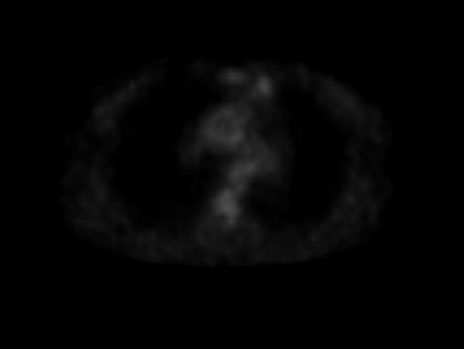
The subject followed up two weeks later at her optometrist office with complaints of her OS eyelid feeling extremely hard and limited in mobility. Upon physical examination, the patient was found to have an irregular, large lesion on the right side of her chest inferior to her mid-clavicle. She was then referred out for another oncology consultation. When seen two weeks later, a right mid-clavicular superficial 3 cm mass and a residual tumor in the left eyelid were found. She was then sent for further staging and positron emission tomography (PET) scan due to concern of Richter transformation.
The subject returned after one month to discuss the diagnosis of diffuse lymphoma disease and hepatitis C. The patient was subsequently started on a chemotherapy regimen and referred to a primary care physician for management.
Patient perspective
The patient stated there was constant pressure within the left eyelid and reported a pain rating scale of 5/10 to 7/10 whenever the eyelid became edematous. There was no specific time of day nor reason noted for the increased swelling during these episodes. During exacerbations of symptoms, she revealed feelings of embarrassment by her physical appearance and began to isolate herself; however, she continued working throughout the diagnosis to remain on her employer’s health insurance. The client also experienced increased depression, anxiety, hopelessness, and tobacco use during this time. She communicated that diagnosis and treatment were postponed after she witnessed her mother endure an adverse response to chemotherapy following a diagnosis with breast cancer. She ultimately did not want to have the same experience and chose to rely on her religious beliefs until she opted for medical intervention.
Therapeutic intervention
An orbital mass excision was performed for biopsy and followed by surgical excision to completely remove the malignancy. Patient then completed 12 rounds of chemotherapy for a total duration of six months. As for treatment, she was prescribed Bendamustine 138 mg IV (intravenously) daily over two days in NS 50 mL at a rate of 333 mL/h, Acetaminophen 650 mg tablet oral daily for one day, Aprepitant 130 mg IV daily for one day, Dexamethasone sodium phosphate 8 mg IV daily over 5 minutes for one day in NS 7.2 mL at the rate of 96 mL/h, Diphenhydramine HCL 25 mg IV daily short over 15 minutes for one day in NS 4.5 mL at the rate of 20 mL/h, Heparin lock flush 5 mL IV daily for two days, normal saline flush 20 mL injection once, Ondansetron 8 mg IV daily short over 15 minutes for one day in NS 6 at the rate of 40 mL/h, Prednisone 4 (20 mg) tablet oral every AM (morning), Promethazine HCL 1 (25 mg) tablet oral q 6 hours PRN (as needed), Rituximab 645 mg IV daily for one day, Ibuprofen tablet oral PRN, Doxycycline Hyclate 1 (100 mg) tablet oral BID (twice a day) for 14 days.
Follow-up and outcomes
The patient was noted to have an early clear response to the treatment plan and upon follow-up was found to be in full remission.


Discussion
Orbital NHL is a rare extranodal presentation that can affect the lacrimal glands, conjunctiva, eyelids, and ocular adnexa. A history of autoimmune disease(s) and/or chronic infection(s) is often associated with extranodal lymphomas. Orbital lymphomas most commonly present as an indolent, painless mass in elderly men. The presentation can exist like many other ocular conditions, which can make the diagnosis difficult and prolong treatment initiation. Physician training and recognition of rare presentations of NHLs is warranted for improved prognosis of patients [2],[3].
Our patient presented with unilateral ptosis without any significant history of chronic infections, autoimmune diseases, or systemic symptoms that would indicate risk factors for NHL. This case further demonstrates that although right infraclavicular lymph node enlargement is rare, physicians should be concerned about the involvement of NHL in patients with similar presentations [4]. Furthermore, throughout treatment, this patient was found to have contracted hepatitis C. It has been reported that chronic hepatitis C, orbital pseudo-tumors, and Sjogren syndrome have a significant overlap [5]. Therefore, physicians of patients that appear with unexplained ocular malignancies should consider testing for hepatitis C or at a minimum assessing for any associated symptoms.
Successful remission was achievable with an appropriate chemotherapeutic regimen which included an antineoplastic alkylating agent and a monoclonal antibody. However, timing should be considered a key factor for patient prognosis. As discussed previously NHL is typically indolent; however, as this case has demonstrated, the risk of malignancy is probable. The client refused treatment for an entire year posing a risk for high-grade transformation. Early diagnosis, improved patient compliance, and prompt initiation of treatment could have limited the aggressive nature of the malignancy. A partnership between various medical specialties is vital to patient diagnosis, especially when dealing with rare occurrences of NHL.
Conclusion
A rare case of EMZL arising in the lacrimal gland with metastatic complications has been reported. Due to the typical indolent nature of NHL, physicians should not only recognize, but also understand its possible aggressive nature and setbacks. Physicians should work cohesively with other medical professionals to encourage patient understanding of the progression of their current disease state and compliance to treatment options.
REFERENCES
1.
Thandra KC, Barsouk A, Saginala K, et al. Epidemiology of non-Hodgkin’s lymphoma. Med Sci (Basel) 2021;9(1):5. [CrossRef]
[Pubmed]

2.
Jones TE, De Frances MC, Aggarwal N. Educational case: Orbital B-cell lymphoma with amyloid deposition. Acad Pathol 2021;7:2374289520934089 . [CrossRef]
[Pubmed]
3.
Ko KWS, Bhatia KS, Ai QYH, King AD. Imaging of head and neck mucosa-associated lymphoid tissue lymphoma (MALToma). Cancer Imaging 2021;21(1):10. [CrossRef]
[Pubmed]
4.
Richner S, Laifer G. Peripheral lymphadenopathy in immunocompetent adults. Swiss Med Wkly 2010;140(7–8):98–104.
[Pubmed]
5.
Huang O, Shah T, Sundarapandiyan D, Akiyama MJ. Orbital pseudotumor as an extrahepatic complication of chronic HCV infection. Case Rep Infect Dis 2018;2018:5498953. [CrossRef]
[Pubmed]
SUPPORTING INFORMATION
Acknowledgments
We would like to thank Dr. Ayers for her time and efforts on the management of this paper and entrusting the use of a patient’s medical history to expound on uncharted territory for further medical application, knowledge, and improvement.
Author ContributionsKenzie Hendrix - Conception of the work, Design of the work, Acquisition of data, Analysis of data, Drafting the work, Revising the work critically for important intellectual content, Final approval of the version to be published, Agree to be accountable for all aspects of the work in ensuring that questions related to the accuracy or integrity of any part of the work are appropriately investigated and resolved.
Sunny Patel - Conception of the work, Design of the work, Analysis of data, Revising the work critically for important intellectual content, Final approval of the version to be published, Agree to be accountable for all aspects of the work in ensuring that questions related to the accuracy or integrity of any part of the work are appropriately investigated and resolved.
Rhonda Ayers - Acquisition of data, Analysis of data, Revising the work critically for important intellectual content, Final approval of the version to be published, Agree to be accountable for all aspects of the work in ensuring that questions related to the accuracy or integrity of any part of the work are appropriately investigated and resolved.
Guaranter of SubmissionThe corresponding author is the guarantor of submission.
Source of SupportNone
Consent StatementWritten informed consent was obtained from the patient for publication of this article.
Data AvailabilityAll relevant data are within the paper and its Supporting Information files.
Conflict of InterestAuthors declare no conflict of interest.
Copyright© 2022 Kenzie Hendrix et al. This article is distributed under the terms of Creative Commons Attribution License which permits unrestricted use, distribution and reproduction in any medium provided the original author(s) and original publisher are properly credited. Please see the copyright policy on the journal website for more information.