
| Table of Contents |  |
|
Case Report
| ||||||
| Glioblastoma multiforme occurring in a child with acute lymphoblastic leukemia | ||||||
| Mohammed Al Pakra1, Gihan Mahmoud1, Abdullah Al Jabri2, Hussam Yousef El Hag1, Ehab Hanafy1 | ||||||
|
1King Salman Armed Forces Hospital, Prince Sultan Oncology center, Tabuk, Kingdom of Saudi Arabia.
2King Salman Armed Forces Hospital, Pediatrics Department, Tabuk, KSA. | ||||||
| ||||||
|
[HTML Abstract]
[PDF Full Text]
[Print This Article]
[Similar article in Pumed] [Similar article in Google Scholar] |


| How to cite this article: |
| Al Pakra M, Mahmoud G, Al Jabri A, El Hag HY, Hanafy E. Glioblastoma multiforme occurring in a child with acute lymphoblastic leukemia. J Case Rep Images Oncology 2016;2:5–8. |
|
Abstract
|
|
Introduction:
Radiation therapy is an established cause of secondary neoplasia in the central nervous system. Few reports of glioblastoma multiforme following radiation therapy have been documented.
Case Report: We herein report a rare case of glioblastoma multiforme in a remitted acute lymphoblastic leukemia (ALL) patient who have received craniospinal irradiation and stayed free of complications for a five-year follow-up. Conclusion: Implementation of leukemia protocols with minimal central nervous system (CNS) irradiation role may minimize the late complications and even the development of secondary CNS tumors. | |
|
Keywords:
Central nervous system (CNS), Glioblastoma multiforme, Leukemia, Radiotherapy, Tumors
| |
|
Introduction
|
|
The treatment of acute lymphocytic leukemia (ALL) has been interrupted with the high rate of occurrence of central nervous system (CNS) leukemia [1]. Radiation therapy, in combination with chemotherapeutic agents, has been well known to be one of the prophylactic methods to ascertain long-term disease free survival for the childhood ALL patients. However, when the radiation itself acts as an oncogenic factor, especially for the occurrence of glioblastoma multiforme (GBM) subsequent treatment of tumor becomes even more troublesome [2]. |
|
Case Report
|
|
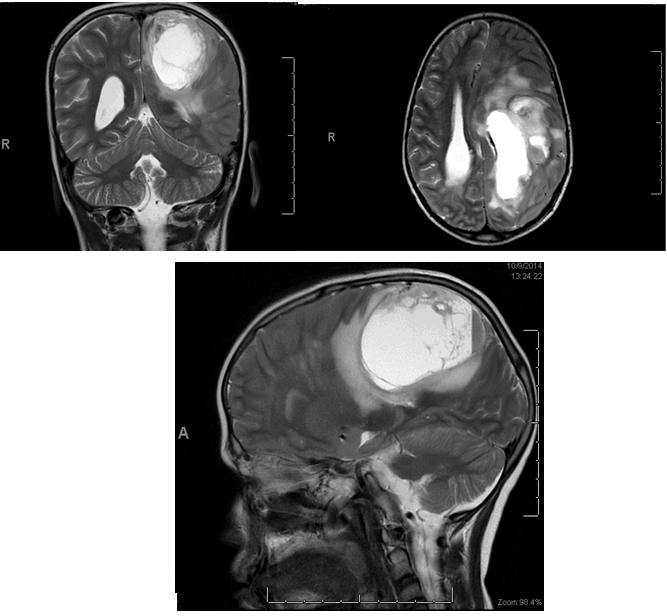
A seven-year-old boy presented to our hospital in 2006 with breathing difficulty, easy fatigability, pallor, and generalized lymphadenopathy. The child was diagnosed as T cell acute lymphoblastic leukemia with CNS disease as proved by the presence of blast cells in the cerebrospinal fluid. Cytogenetic study was reported as normal. The patient started immediately on chemotherapy (St Jude total XIII protocol) [3]. He went into complete remission after the induction phase. He continued through the protocol with good tolerance to chemotherapeutic agents and with minimal reported complications. At week 56, the patient received craniospinal irradiation as per the protocol guidelines (cranial irradiation 24 Gy/16 fractions and spinal irradiation 12 Gy). He resumed the protocol of chemotherapy till he ended his treatment in 2009, when he was in complete remission and in good general condition. He started his followup program regularly with no reported complications for five years. In 2014, the child presented with severe headache, projectile vomiting, blurring of vision, increased weakness and poor appetite. His symptoms and signs were suggestive of increased intracranial tension, so we requested full investigations to exclude the recurrence of the initial disease including bone marrow aspirate which was normal. We requested also MRI scan of brain and spine which was done during his admission and showed a large supratentorial multi-loculated mass suggestive of brain tumor versus brain abscess (Figure 1). The child's general condition showed some improvement after the initiation of brain dehydrating measures, steroids and mannitol. This was followed by neurosurgical intervention with partial excision of the brain mass. Histopathology studies confirmed the diagnosis of Glioblastoma multiforme. Following the surgical intervention, the child deteriorated rapidly, as he started to develop uncontrolled seizures with progressive deterioration in his general condition till he ended into deep coma. Unfortunately, the child was intubated and ventilated for few days before he passed away from the rapidly progressive disease and cardiopulmonary arrest. |
|
|
|
Discussion
|
|
Radiation therapy is an established cause of secondary neoplasia in the central nervous system [4][5][6][7]. Both benign and malignant tumors can develop after cranial irradiation in the form of meningiomas [8] [9] [10], and sarcomas [11] [12] [13] . Few reports of glioblastoma multiforme following radiation therapy have been documented [14]. Glioblastoma multiforme, despite a most occurring de novo brain tumor, its development from radiation effect have been reported very rarely worldwide [15]. Moreover, its occurrence in ALL patients has been reported even scarcely. Salvati et al. analyzed their 16 cases and previously reported cases of radiation-induced GBM and measured the frequency among all GBM to be 1.3% [16]. Salvati et al, reported 10 cases who were treated earlier for ALL [17]. They have stated that by examining the various case series, it is evident that gliomas occur more frequently in patients treated for ALL. Moreover, it has been suggested that the simultaneous administration of intrathecal chemotherapeutic drugs might also play an etiologic role that leukemia itself might favor tumors of the glia [18] [19]. Concerning the radiation dose, there have been reports postulating that prophylactic irradiation of higher dose (more than 30 Gy) gives rise to higher risk of malignant brain tumor occurrence compared to that of lower doses (less than Gy). On the other way, there have been counter proposals suggesting that radiation does not always gives rise to higher rate of secondary tumor development because when the radiation dosages are too high, oncogenic cells may also be eliminated [18]. Cahan et al. in 1948 proposed the following criteria for the definition of radio-induced tumors: 1) the tumor must originate in the previously irradiated region; 2) there must be a sufficiently long time interval from irradiation and the onset of post radiation tumor; 3) the histotype of the tumor must be different from the primary one; 4) the patient must not suffer from pathologies favoring the development of tumors such as Von Recklinghausen's disease or Li Fraumeni's disease, tuberous sclerosis, xeroderma pigmentosa, retinoblastoma, etc. [20]. In the case report by Daewon et al, they have stated that GBM developed after irradiation have been known to have less tumor control rate and more aggressive behavior compared to that of the de novo GBM, even after the tumor is being treated with active medical and surgical means [2]. Moreover, severity of the progress of gliomas, when developed after irradiation, is not related to radiation dose received. Furthermore, there are no much clinically efficient management protocols extending survival rate for radiation-induced GBM and when it is related to ALL, prognosis is even worse. More trials with active surgical manipulation, in combination with medically possible strategies and also with other advanced therapeutic means should be carried out to gain improved clinical outcome. |
|
Conclusion
|
|
Implementation of leukemia protocols with minimal central nervous system (CNS) irradiation role may minimize the late complications and even the development of secondary CNS tumors. |
|
References
|
|

|
[HTML Abstract]
[PDF Full Text]
|
|
Author Contributions
Ehab Hanafy – Substantial contributions to conception and design, Acquisition of the data, Drafting the article, Revising it critically for important intellectual content, Final approval of the version to be published Abdullah Al Jabri – Substantial contributions to conception and design, Acquisition of the data, Drafting the article, Revising it critically for important intellectual content, Final approval of the version to be published Hussam Yousef El Hag – Substantial contributions to conception and design, Drafting the article, Final approval of the version to be published Mohammed Al Pakra – Substantial contributions to conception and design, Revising it critically for important intellectual content, Final approval of the version to be published Gihan Mahmoud – Substantial contributions to conception and design, Revising it critically for important intellectual content, Final approval of the version to be published |
|
Guarantor of submission
The corresponding author is the guarantor of submission. |
|
Source of support
None |
|
Conflict of interest
Authors declare no conflict of interest. |
|
Copyright
© 2016 Ehab Hanafy et al. This article is distributed under the terms of Creative Commons Attribution License which permits unrestricted use, distribution and reproduction in any medium provided the original author(s) and original publisher are properly credited. Please see the copyright policy on the journal website for more information. |
|
|